
Glossary term
Emoticons
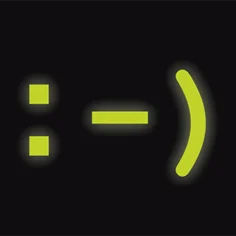
An emoticon is an expression made from typed characters, such as :-) or ;-). The characters suggest a face or gesture, adding a cue about tone to a message without requiring a separate picture.
Reading the face
In :-) the colon supplies eyes, the hyphen a nose and the closing parenthesis a smile. The face is read sideways. Leaving out the nose produces :). Other forms, including faces read upright, use different arrangements of characters.
The exact meaning depends on the person and the conversation. A wink can suggest playfulness or irony, but a symbol cannot guarantee how another reader will interpret a sentence.
Emoticons and emoji
An emoticon is assembled from text characters. Emoji are standardized characters or sequences rendered as pictographs, with appearance varying by software and platform. An application can automatically replace a typed emoticon with a graphic, which is one reason the distinction can be easy to miss.
Frequently asked questions
What is the difference between an emoticon and an emoji?
An emoticon makes an expression from typed characters, such as :-). Emoji are characters or sequences displayed as pictographs. Some applications turn typed emoticons into graphics automatically.
What does :-) mean?
It is a sideways smiling face: eyes, nose and mouth. It commonly signals friendliness or a light tone, though its meaning still depends on the conversation.
Ephemera
The recovered proposal and later graphics show how a few characters became part of the visual language of messaging.


Related reading
 THE TEXT PICTURE
ASCII Art
ASCII art is a picture or design made by arranging text characters into shapes. It uses letters, numbers, punctuation, and spaces as drawing material, often in a fixed-width font that keeps the characters aligned.
 THE MICROSOFT WINDOW
MSN Messenger
MSN Messenger was Microsoft’s instant messaging service, introduced in 1999 and later renamed Windows Live Messenger. It let people see contacts online and exchange messages, with later versions adding display pictures, personal messages, voice, video, and playful effects.
 THE MESSAGE
Away Message
An away message is a notice that tells people you are unavailable to respond, often explaining why or when you will be back. Depending on the messaging service, it appears as a status message or is sent as an automatic reply.