
Glossary term
Cufón Font Replacement
Cufón displayed custom typefaces by drawing the letters with JavaScript after a page’s HTML text was available. It gave designers dynamic custom type without Flash or an image to make for every heading.
sIFR had helped free custom typography from the job of making a separate image for every heading. Cufón carried that freedom into a different setup: the words arrived as HTML, and JavaScript replaced their appearance with the chosen typeface. Visitors did not need Flash.
The page already had its words
Created by Simo Kinnunen, Cufón let a designer prepare a font once and apply it to selected text on the site. A new title could come from the publishing system and receive the same type treatment. Changing the wording did not require another exported image.
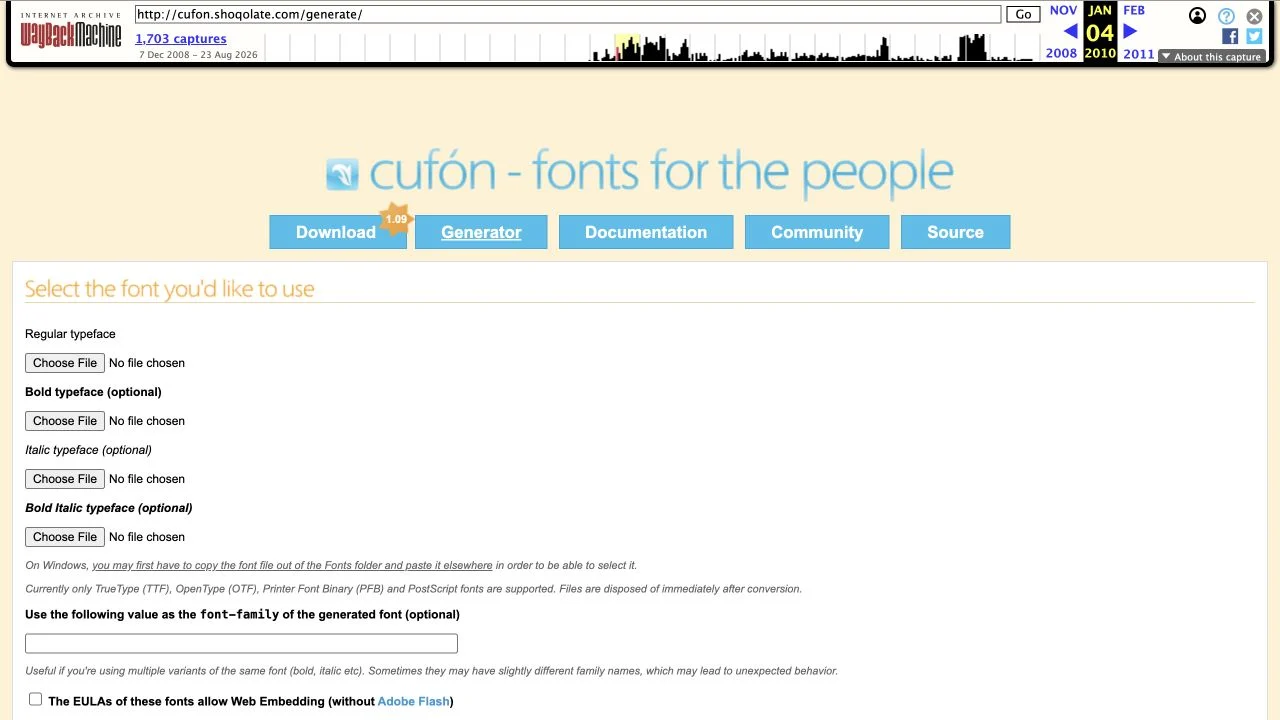
The generator, launched in 2008, turned font preparation into a web form. The resulting file gave Cufón the shapes it needed to draw the letters. Once the page’s text was available, the replacement could run over those words. It was a different way to achieve the dynamic typography that had made sIFR so exciting.
It really was drawing the letters
In browsers with canvas support, Cufón typically replaced each word with its own little canvas element and drew the individual letters inside it. The words could still wrap onto new lines, but the visible type was now a series of drawings. Cufón also offered character-by-character replacement; older Internet Explorer used a different drawing method.
The compromise became obvious when you tried to select the text. The words were still in the document, but their visible letters were drawings, with different behavior from ordinary browser text. The project’s FAQ records text selection as one of its limitations.
Native web fonts eventually let the chosen typeface remain ordinary text on screen. The hosted Cufón generator closed in 2017. For a period before that became routine, Cufón helped designers put custom type onto changing pages without the old image-production job or a dependency on Flash.
Same words, different type
Demonstrated here with modern web fonts.
Frequently asked questions
Why can’t I select text on an old Cufón website?
The letters you see may be drawn shapes replacing the browser’s normal text display. Text selection was a documented limitation of Cufón.
Is the Cufón font generator still available?
The original hosted generator closed in early 2017. The project’s source code remains available, while its closure page recommends standard web fonts for current sites.
Ephemera
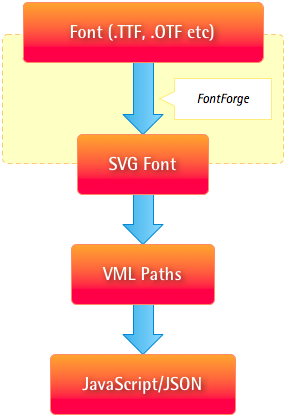
The font-upload form people actually used, and the project’s own diagram of what happened to a font afterward. The screenshot is from a January 4, 2010 Wayback capture.
Related reading
 ALL THIS FOR A HEADLINE
sIFR
After years of cutting headlines into images, custom type could finally follow the words.
 INTERNET HISTORY
Web-Safe Colors
There were millions of possible RGB values—and a much smaller set you were encouraged to trust.
 RELATED TERM
JavaScript
JavaScript is a programming language that can make web pages respond to what people do. It can update information, react to a click or send a request without loading a whole new page.
Sources
- Cufón’s original generator, preserved January 4, 2010
- Cufón project wiki: generator and rendering engines
- Cufón project FAQ: text selection and other limitations
- Simo Kinnunen: why the hosted generator closed
- W3C: native CSS fonts
- Cufón’s original API: replacement after HTML is ready, with word and character options