
Glossary term
MP3
MP3 is a lossy audio coding format that reduces the data needed to store or transmit a recording. Its small files and widespread adoption helped fuel Napster, LimeWire, and the iPod era—and changed what people expected from music.
Your record collection became a folder
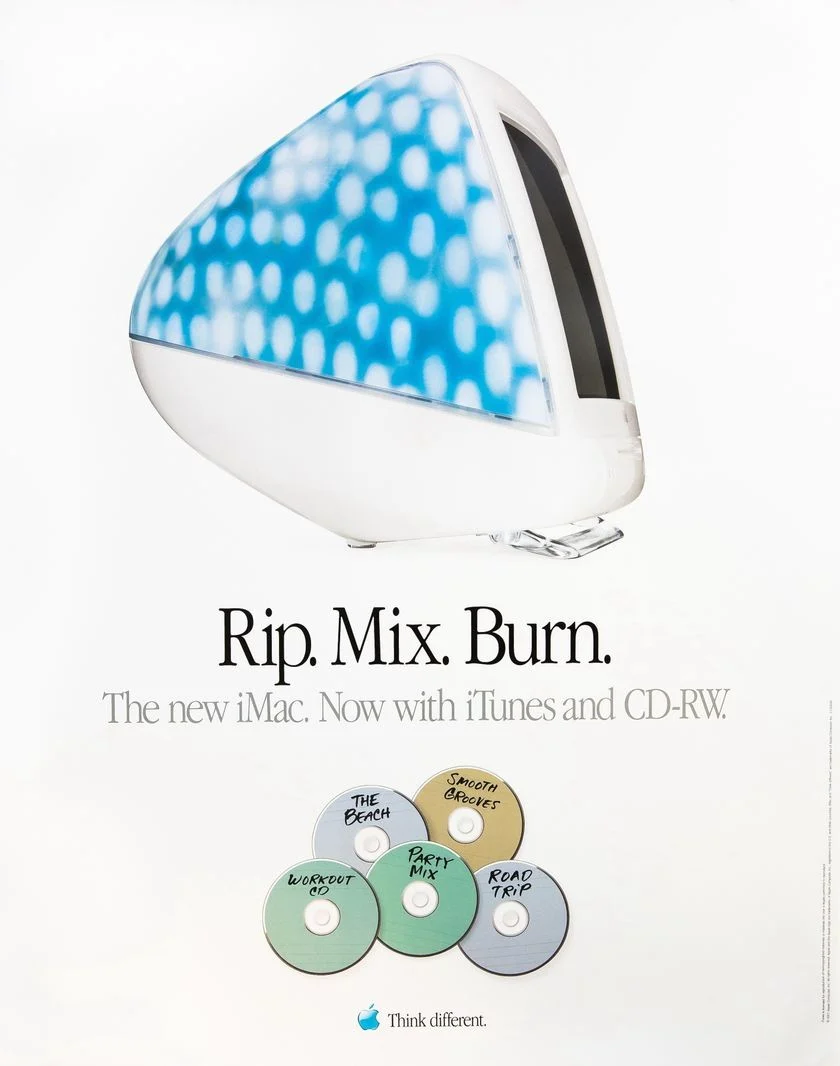
A song used to take up space on something you carried: a record, a cassette, a CD. MP3 helped make a computer—and eventually a pocket-sized player—a practical home for an entire collection. You could copy tracks from a CD, sort them into folders, assemble a playlist, and burn a different mix for the car.
The compression mattered because storage and connections were limited. Four minutes at 128 kilobits per second takes about 3.84 megabytes, compared with roughly 42.3 megabytes for the same duration of stereo CD audio. That tradeoff made a song much easier to keep and send. MP3 achieves that reduction by discarding some audio information.
Then you could search other people’s collections
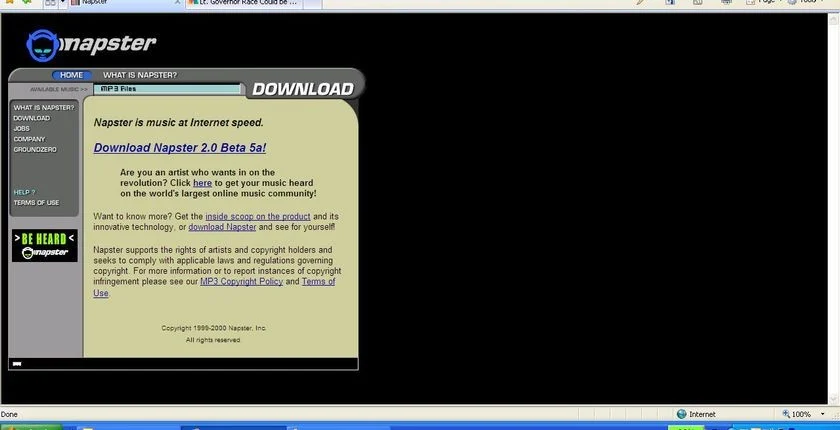
Napster, launched in 1999, made the MP3 a music-industry emergency. Its software let people find tracks on other users’ computers and download copies. A stranger’s collection could suddenly contain the song you had been trying to find. The same convenience made unauthorized copying possible on a scale that brought record companies and musicians to court.
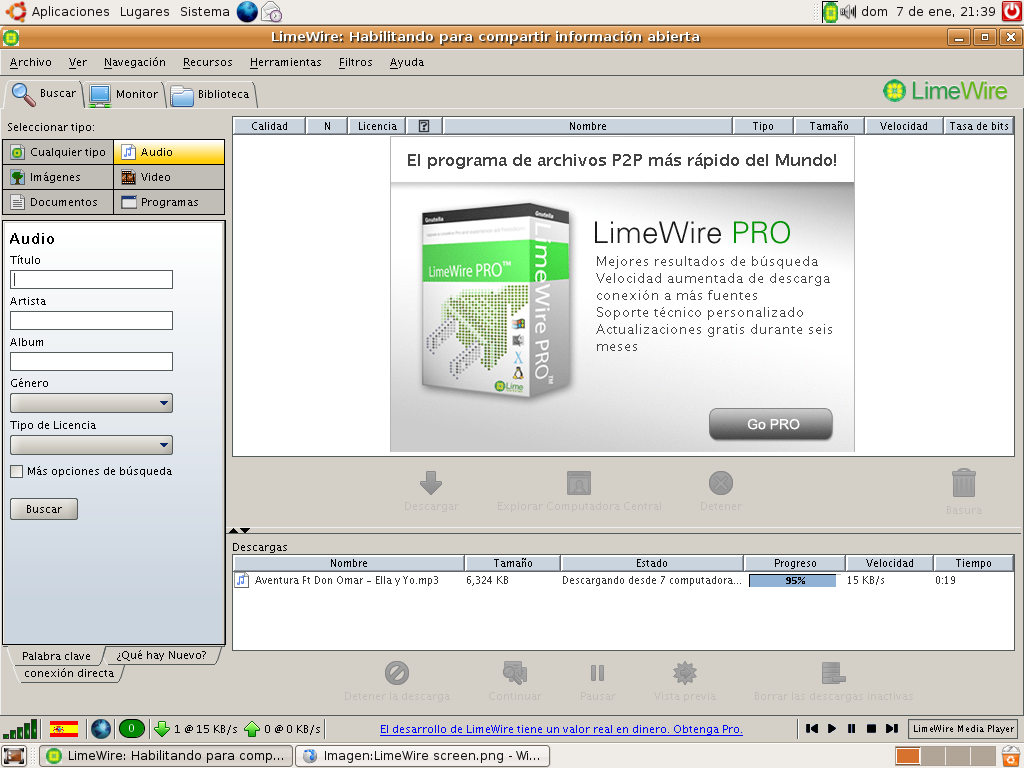
LimeWire carried file sharing into another chapter through the Gnutella network. It handled more than music, but MP3s were part of the attraction: a song could move between computers without anyone mailing a disc. The file no longer had to come from a shop, or even from someone you knew.
A thousand songs, no CD wallet
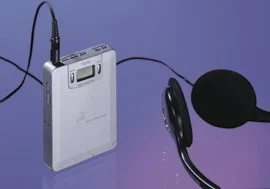
Portable MP3 players existed before the iPod. The 1998 MPMan below is one of them. Apple’s 2001 iPod brought a much larger library into a small device, with a scroll wheel and synchronization through iTunes. Its launch promised “1,000 songs in your pocket.”
That was a different way to leave the house. You no longer had to choose which discs to bring. Your collection came with you, and choosing what to hear became something you did with your thumb.
From downloading a song to expecting every song
The iTunes Music Store opened in 2003, selling individual downloads for 99 cents. Those purchases used AAC, another audio format. MP3 had helped establish the habit of collecting music as files; the commercial download market could build on that habit without using the same encoding.
Subscription streaming later changed the bargain again: access to a catalog instead of assembling every track yourself. Apple Music’s 2015 launch put a streaming catalog alongside music people had bought or copied from CDs.
MP3 helped teach a generation to search for a track, download it, and take it along. Streaming later made access to an enormous catalog the product. By then, expecting the music you wanted to be within reach no longer seemed particularly extravagant.
Ephemera
The download page, the file-sharing window, the sales pitch, and the players that took the library out of the house.

Frequently asked questions
What does MP3 stand for?
MPEG Audio Layer III. The name refers to an audio coding layer, not to a standard called MPEG-3.
Why are MP3 files smaller than WAV files?
MP3 uses lossy compression, discarding some audio information to reduce the data rate. WAV is a container often used for uncompressed PCM audio, which usually takes much more space for the same duration. The actual sizes depend on the encoding and settings.
Does converting an MP3 to WAV improve its quality?
No. It does not recover information discarded when the MP3 was encoded. Converting can be useful for editing or compatibility, but a larger file does not restore the original recording.
What is MP3 bitrate?
The amount of encoded data used per second of audio, usually expressed in kilobits per second. A higher bitrate generally allows more audio information to be retained, but recording quality and encoder settings also affect the result.
Related reading
 INTERNET HISTORY
Windows Media Player
Copy the CD. Fix the track names. Choose a visualization. The collection lived on the PC.
 INTERNET HISTORY
QuickTime
Before video felt built into the web, there was a player to open and a trailer worth waiting for.
 INTERNET HISTORY
RealPlayer
Click the clip. Open the player. Wait for the internet to catch up.
 RELATED TERM
Lossless and Lossy Compression
Lossless compression makes a file smaller while allowing its original contents to be restored exactly. Lossy compression makes a file smaller by permanently discarding some detail.
Sources
- Fraunhofer IIS: MP3 development timeline
- Computer History Museum: MP3 and the changing music industry
- 2001 Napster opinion: how the MP3-sharing system worked
- Lime Company: the original LimeWire business
- Apple introduces the iPod, October 2001
- Apple launches the iTunes Music Store, April 2003
- Apple introduces Apple Music, June 2015