
Glossary term
Microsoft Antitrust Case
The Microsoft antitrust case was a US government challenge to the way Microsoft protected its Windows monopoly. The browser was at the center of the fight: if software could run through a browser across different operating systems, Windows might no longer control the doorway to every application.
A browser could become more than a window
For a person using a PC, a browser opened websites. For a software company, it might become a platform. Netscape’s browser and Java suggested that an application could depend less on the operating system beneath it. That was a threat to the advantage Windows held through the enormous collection of software written for it.
Microsoft’s response was not confined to adding browser features. Internet Explorer became closely integrated with Windows, while deals and restrictions shaped which browsers computer manufacturers and other distributors could put in front of customers. The operating system, the default browser and the route onto the web were becoming difficult to separate.
The distribution fight became a public spectacle
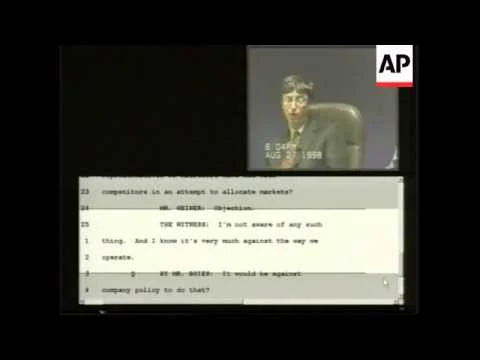
The federal government and state plaintiffs brought their major case in 1998. Internal communications, agreements, demonstrations and testimony turned software distribution decisions into courtroom evidence. Bill Gates’s videotaped deposition became one of the trial’s most recognizable images.
The documents can be surprisingly concrete. A December 1997 Microsoft package preserved as an exhibit addressed manufacturers installing Internet Explorer before a customer received the machine. The browser was not just competing for a download. It could already be on the desktop when the buyer first switched the PC on.
The ruling was not the end of the story
The trial court issued its findings in 1999, and a breakup order followed in 2000. On appeal in 2001, the court upheld the core finding that Microsoft had unlawfully maintained its operating-system monopoly, while rejecting or revisiting other parts of the decision and setting aside the breakup remedy. A conduct-based final judgment followed in 2002. Microsoft was not split into two companies.
The lasting question is easy to recognize whenever a platform controls access to something competing with it: how much room does another product really have to reach people? On the 1990s desktop, that question arrived as browser icons, setup screens and the software already waiting on a new computer.
Frequently asked questions
Was Microsoft broken up after the antitrust case?
No. The trial court ordered a breakup in 2000, but that remedy was set aside on appeal. The case ultimately produced conduct restrictions and disclosure obligations rather than a division into two companies.
Why was Internet Explorer central to the case?
The browser could become a platform for applications that were less dependent on Windows. The case examined Microsoft’s use of its operating-system position, integration and distribution practices to protect that position against competing middleware.
Ephemera

Related reading
 A PROGRAM INSIDE THE PAGE
Java Applets
The page came alive: games, drawing tools, and programs you could use without clicking away.
 THE BROWSER ASKED FOR PERMISSION
ActiveX
Windows Update, camera feeds, and the moment visiting a website could mean installing software.
 RELATED TERM
Internet Explorer 6 CSS Hacks
Internet Explorer compatibility work addressed differences between IE’s rendering behavior and the behavior authors expected from their pages.